The Voice of Construction Leadership Professionals
through the lens of the
UK Construction Industry Task Force |
| |
|
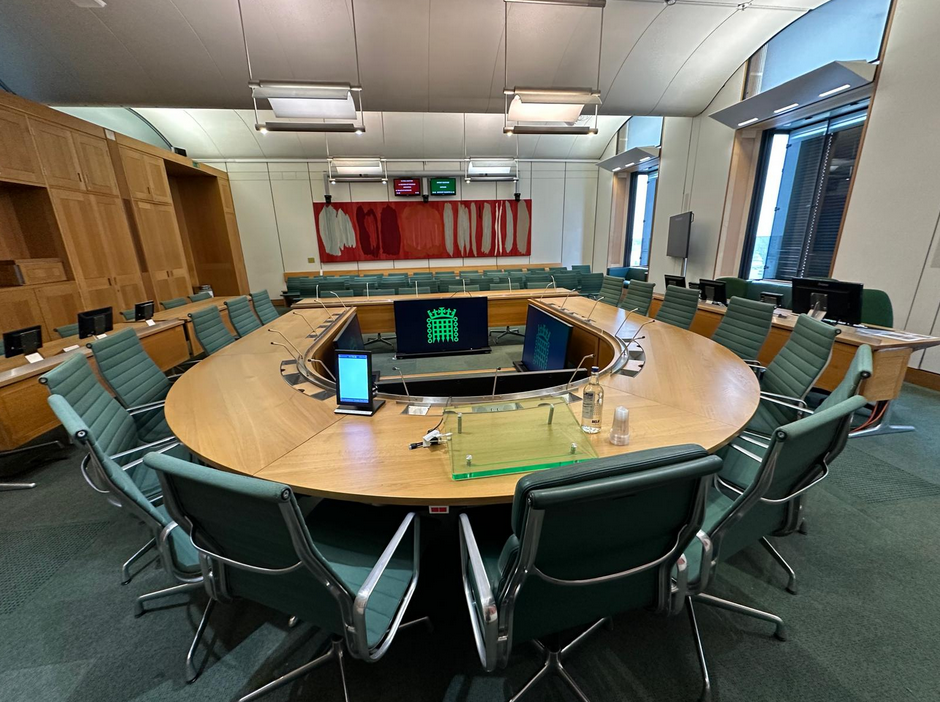
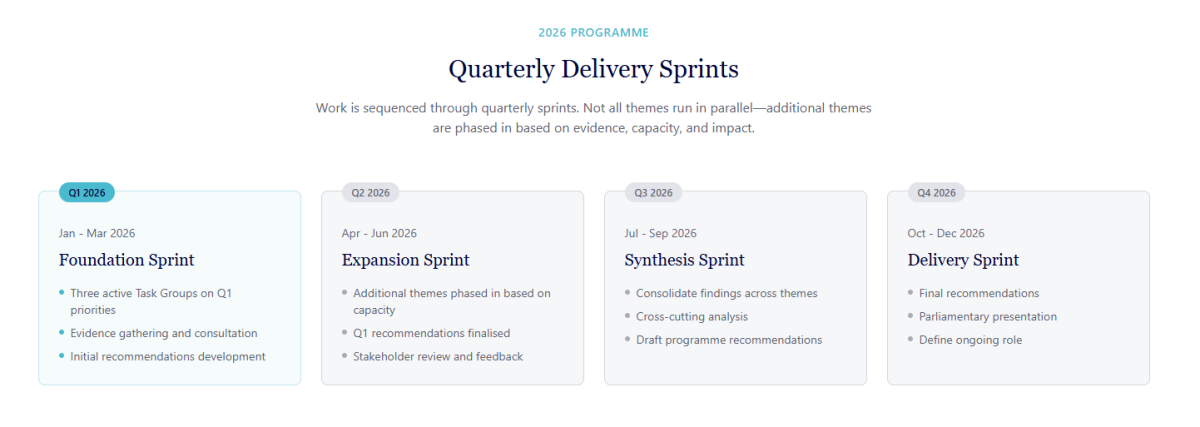
Since its unique launch last year at Westminster, the Task Force has made a strong start. Over the first two quarters of 2026, several industry challenges. This sprint of 2026, and explains how the Task Force was set up to be an agile and responsive unique link between the industry and government, and is now looking to the future ... |
| |
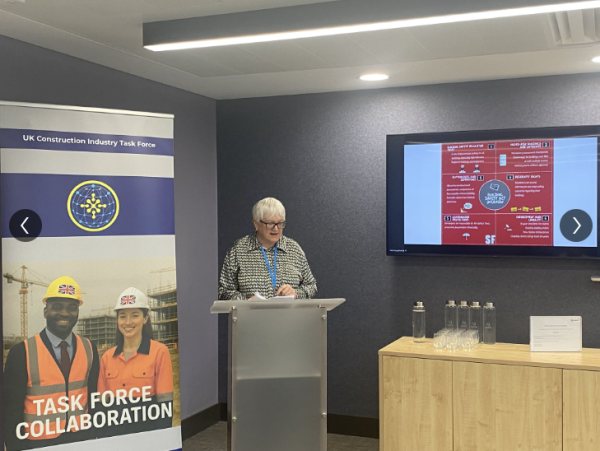
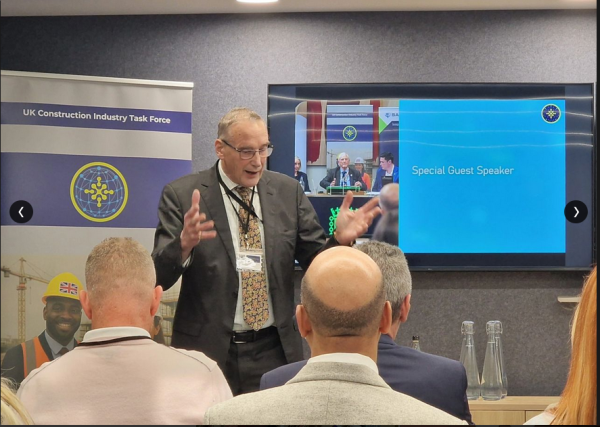
The Construction Industry Task Force (CITF) gathering at RICS Headquarters on 30 June marked a defining moment in our collective journey to elevate competence, capability, and accountability across the built environment.
From the outset, the event carried a sense of purpose and momentum. The calibre of speakers was exceptional—each offering not only technical insight but a compelling vision for how our industry must continue to evolve. Contributions were thoughtful, candid, and grounded in real-world experience, reinforcing the importance of leadership at every level.
Equally striking was the audience itself. Bringing together professionals from across disciplines, sectors, and regions, the room reflected the very collaboration our industry requires. Engagement was not passive; it was dynamic, informed, and purposeful. The dialogue that unfolded—both in person and through seamless remote participation—demonstrated the strength of a community committed to progress.
The interactive format, supported by excellent audiovisual delivery, enabled a genuinely inclusive exchange of ideas. Voices from across the sector were heard, challenged, and built upon, creating a rich and constructive environment that extended well beyond a traditional conference setting.
|
| |
|
As highlighted in Clementina Aina’s summary of the event, the themes of capability, CDM 2015, and the practical realities of competence frameworks were brought into sharp focus. What emerged was a shared recognition: that improving outcomes in building safety and construction practice depends not only on standards and guidance, but on culture, leadership, and collective responsibility.
This event was more than a meeting—it was a reaffirmation of intent. The energy in the room, the quality of discussion, and the willingness to engage openly signal a sector that is ready to move forward with clarity and conviction.
The CITF extends its sincere thanks to all speakers, contributors, and attendees who made the day such a success. The challenge now is to carry this momentum forward—translating insight into action, and collaboration into lasting change.
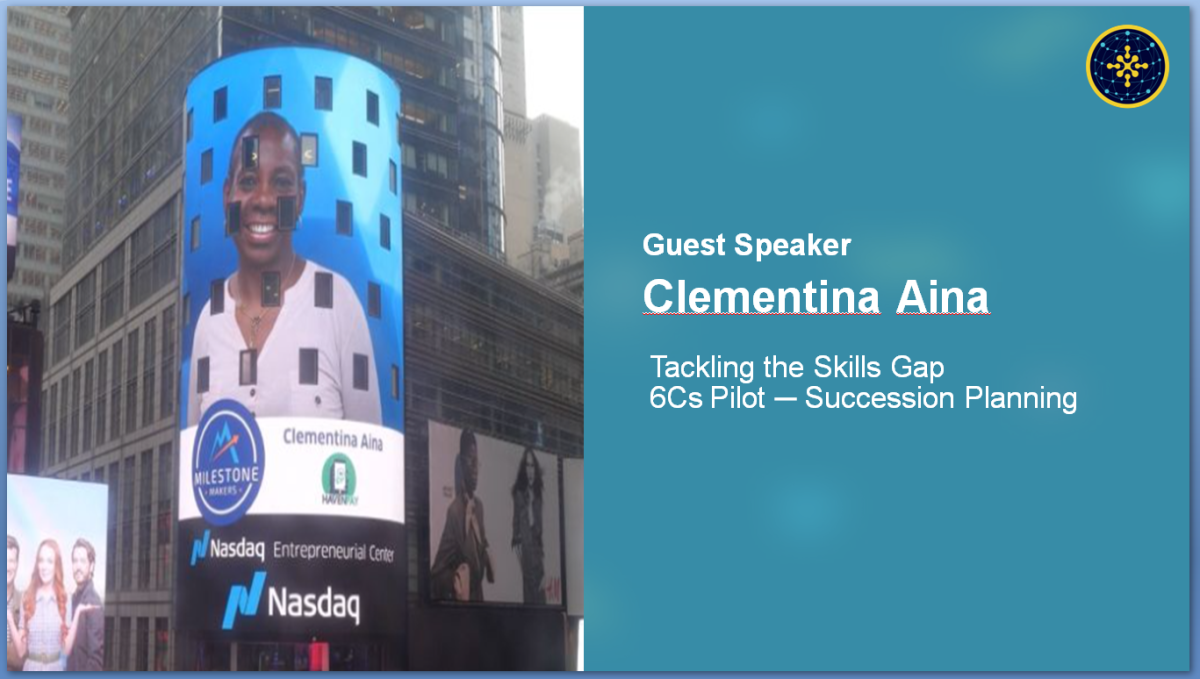
Clementina delivered an inspired presentation for a pilot project, and shared a belief she has held for some time ─ for over 20 years, we've been trying to solve a workplace skills crisis ─ treating the symptom while overlooking a much deeper problem ─ the capability visibility gap ... more to follow on this fascinating work unfolding ... |
| |
Heathrow: Leading the Way in Safe, Inclusive Infrastructure |
| |
|
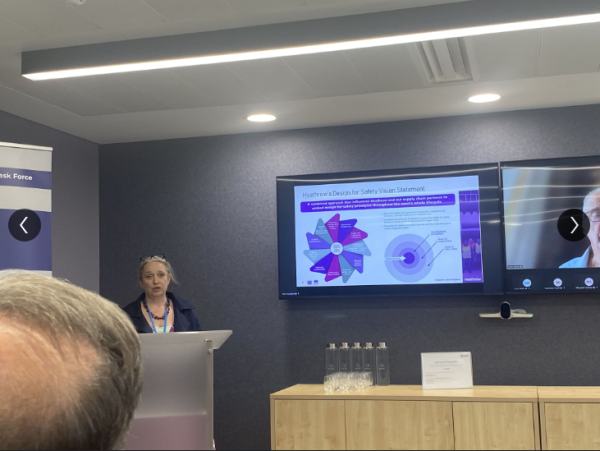
Jenny McLaughlin’s presentation on the work at Heathrow was a powerful reminder of what bold, thoughtful leadership can achieve in one of the world’s most complex operating environments. Her message combined vision with practical delivery, showing how major infrastructure work can be advanced without losing sight of safety, inclusivity, and the lived experience of the people who use and maintain these spaces
What stood out most was the emphasis on designing with purpose: not simply delivering projects, but shaping environments that remove barriers, respect human diversity, and create better outcomes for passengers, colleagues, and supply chains alike. That approach reflects a modern client mindset—one that understands that the best projects are not only technically excellent, but socially intelligent, legally robust, and morally grounded
Jenny’s contribution also underlined a broader truth that resonated strongly with the Task Force audience: when we design for safety, we must also design for inclusion. Heathrow’s work demonstrates how curiosity, collaboration, and a willingness to challenge assumptions can unlock better solutions and build a culture where capability is strengthened by diversity of thought and experience |
| |
|
Susan Francombe delivered an exceptional legal update that brought clarity, authority, and real practical value to the discussion. Her presentation stood out for its precision and depth, translating complex legal developments into a clear and compelling narrative that resonated strongly with the audience.
What made the update so powerful was not only the technical expertise behind it, but the way it connected law to action. Susan reminded us that robust legal understanding is not a dry compliance exercise; it is a vital enabler of better decisions, stronger accountability, and safer outcomes across the built environment.
Her contribution was a timely reminder that progress in our sector depends on more than technical delivery alone. It requires informed judgment, legal confidence, and the ability to navigate complexity with professionalism and purpose. Susan’s expert presentation embodied all of those qualities, and her insight added real weight to the day’s proceedings |
| |
|
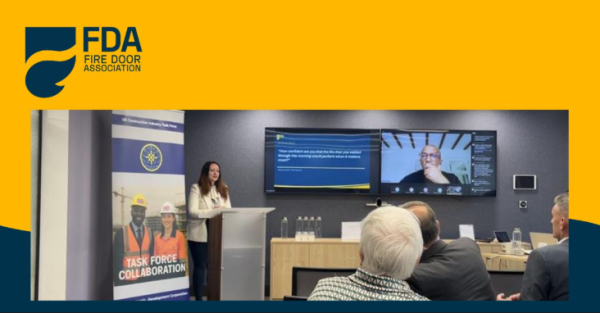
Andrea Taylor delivered a powerful and expertly led introduction to the Fire Door Association, setting the tone for an engaging and highly informative session. Her presentation combined clarity, conviction, and practical insight, bringing real energy to a topic that sits at the very heart of life safety.
The session was enriched by interactive discussion and the contribution of Lee Kennedy, joining remotely as Head of Fire Door Inspection at the ICM, whose expertise added depth and authority to the conversation. Together, the exchange reinforced an essential truth: fire doors are not ordinary building components, but life-critical elements whose performance, specification, installation, inspection, and maintenance demand far greater understanding across the sector.
As David Jones highlighted, there remains a widespread lack of appreciation of what a fire door truly is, and why this often-misunderstood component is so vital to containment, compartmentation, and the protection of life. That challenge makes sessions like this not only valuable, but necessary. They help move the industry from assumption to understanding, and from compliance in name only to genuine competence in practice.
The invitation for the Task Force to meet regionally at the FDM Training Centre is a welcome and important opportunity. It reflects the spirit of collaboration that is needed to raise standards, deepen knowledge, and strengthen the shared commitment to safer buildings and better outcomes for everyone who relies on them |
| |
|
For over three decades, our industry has been on a slow but deliberate journey toward recognising a simple truth: buildings are not just constructed — they are lived in.
When the CDM Regulations first emerged in 1994, they were a significant step forward. But their focus was clear: construction phase safety. The people who would ultimately occupy, maintain, and live with these buildings were, at best, only a secondary consideration.
It wasn’t until the 2007 revision that we saw a meaningful shift — a formal recognition that designers carry a duty not just to those building the asset, but to those who will use it. For the first time, the future user was brought into the design conversation in a structured way, reinforced by alignment with the Workplace (Health, Safety and Welfare) Regulations.
By 2015, that principle had matured further. The duty expanded to consider anyone affected by the project across the full lifecycle of a building. The language evolved. The expectations strengthened. The intent became clearer.
And yet — despite all this progress — one voice has remained consistently underrepresented.
The Resident.
Not the abstract “end user” considered in design risk assessments. Not the theoretical occupant referenced in guidance. But the real, lived experience of people in their homes. |
| |
|
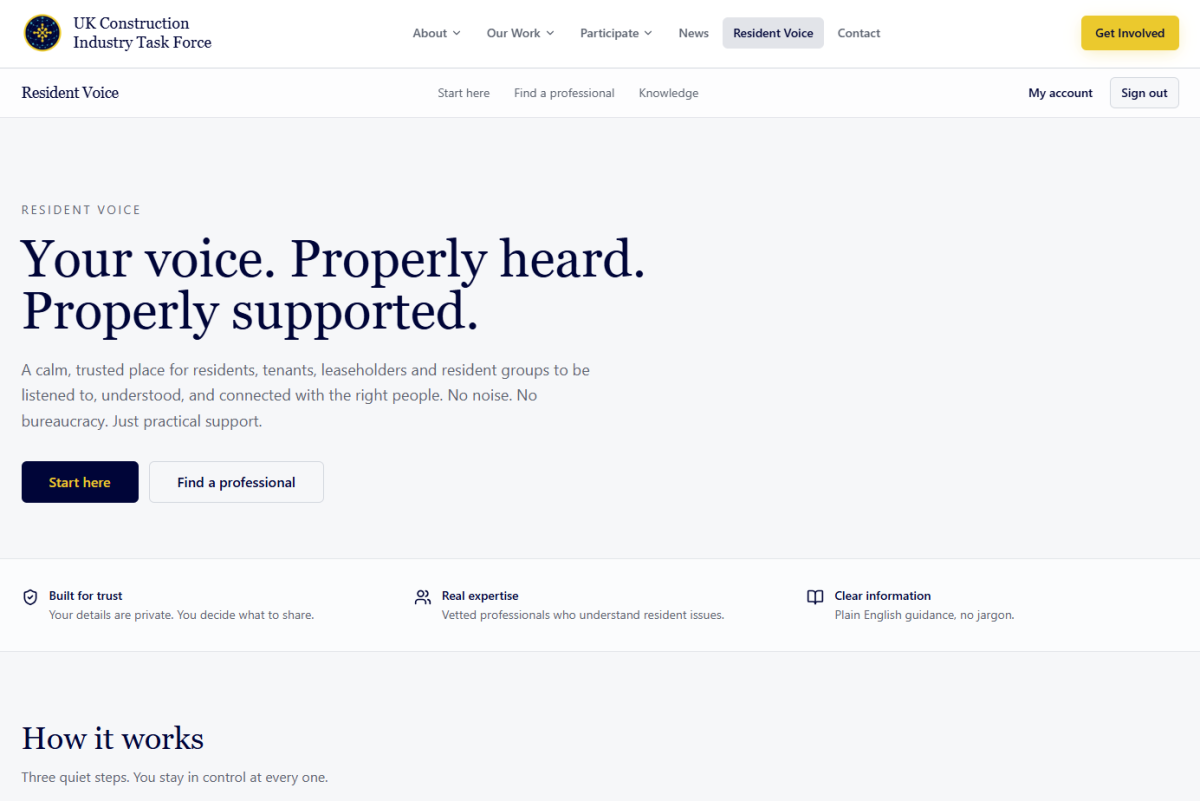
That is why the Task Force has commenced the creation of a unique and special place for the Resident Voice to be properly heard, represented and properly supported.
This is the moment the industry finally begins to close the loop it opened in 2007. |
| |
|
"The lack of care and attention to residential property owners as consumers is a huge oversight in our national administration and indeed has for too long shielded poor practices through the highly questionable principle of ‘buyer beware’ or caveat emptor. In no other walk of commercial or civil life does such a principle arise. It has allowed unassuaged cost and risk to be passed to unsuspecting purchasers of residential property. While it would be foolish to believe this can be rectified by simply setting up a subgroup within CITF, I would hope that this might be a start."
The Earl of Lytton |
| |
|
Incredible people are part of the Task Force and raise the spirit in the room. Some who attended the launch in Westminster last year reported feedback that History was made that day , and others said they felt the magic in the room ... the Sprints also develop their unique experience and interaction too ... |
| |
Gamechanging moments!
The Task Force brings together inventive minds at the cutting edge of technology ─ |
| |
|
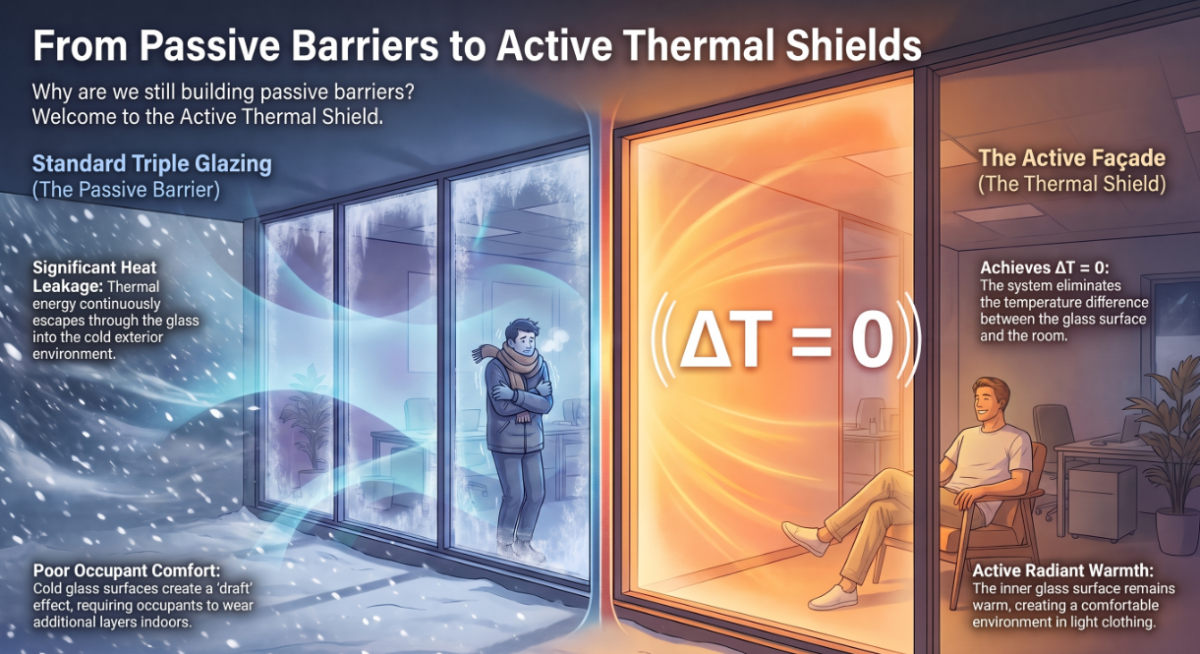
This image captures a powerful idea: sometimes real innovation is not about inventing something entirely new, but about rethinking a proven principle and applying it with fresh intelligence. By turning a passive barrier into an active thermal shield, it shows how familiar science can be transformed into a smarter, more comfortable, and more efficient solution for the future |
| |
|
At every Sprint gathering, the Task Force is a great place for floating 'new' proposals for consideration ... This meeting was no exception; David Jones has been involved hands-on with the design and management of external wall elements over many decades ... The current global energy crisis provides an opportunity to revisit old science in a new setting!
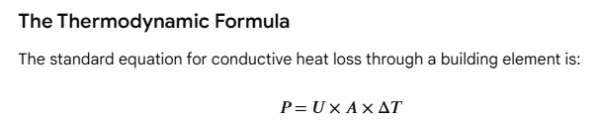
David explained a little about thermal transfer, an engineering science he knows well. The audience in the room 'warmed' to the idea! |
| |
|
In 1701 Sir Isaac Newton laid the conceptual groundwork when he proposed Newton's Law of Cooling, stating that the rate of heat transfer is proportional to the temperature difference between an object and its surroundings
This triggered thoughts as to how local BIPV solar generation from spandrels might be used to generate local 'free' DC energy to create a low-voltage potential to 'warm' the internal face of a metal-sputtered insulated glazing panel so that the delta-T value across the gap is the same - and, not doubting the great engineer Newton was spot on, that simple science could be a sustainable energy game-changer in today's energy crisis!
There was early talk about setting up a pilot project with Innovate UK and students ...
... at the launch, some said there was magic in the room, here's a good example when a Task Force comes together ... |
| |
IMPORTANT UPDATE ON NEXT MEETING |
| |
|
The July Task Force Programme Working Session has been deferred
The UK Parliament Summer recess dates vary slightly between the two Houses:
- House of Commons: Rises at the end of the day on Friday, 17 July 2026, and returns on Tuesday, 1 September 2026.
- House of Lords: Rises at the end of the day on Thursday, 23 July 2026, and returns on Tuesday, 1 September 2026.
The monthly Sprint meetings of the Task Force at RICS HQ will be programmed to resume in September.
The Task Force will be briefed on all relevant ministerial changes. |
| |
|
Competence is Key! ─ Safety is No Accident!
|
| |
|
A paid-up Membership Subscription provides each ICM member with a voting right. Click the link to go directly to a secure, easy bank payment gateway and be part of the decisions ...
If you're not already a Member of ICM, we're always happy to welcome you as our guest ... as our guest, you will soon realise this is the place to be ... always happy to welcome new members to sign up and join with us ... |
| |
|