|
For over three decades, our industry has been on a slow but deliberate journey toward recognising a simple truth: buildings are not just constructed — they are lived in.
When the CDM Regulations first emerged in 1994, they were a significant step forward. But their focus was clear: construction phase safety. The people who would ultimately occupy, maintain, and live with these buildings were, at best, only a secondary consideration.
It wasn’t until the 2007 revision that we saw a meaningful shift — a formal recognition that designers carry a duty not just to those building the asset, but to those who will use it. For the first time, the future user was brought into the design conversation in a structured way, reinforced by alignment with the Workplace (Health, Safety and Welfare) Regulations.
By 2015, that principle had matured further. The duty expanded to consider anyone affected by the project across the full lifecycle of a building. The language evolved. The expectations strengthened. The intent became clearer.
And yet — despite all this progress — one voice has remained consistently underrepresented.
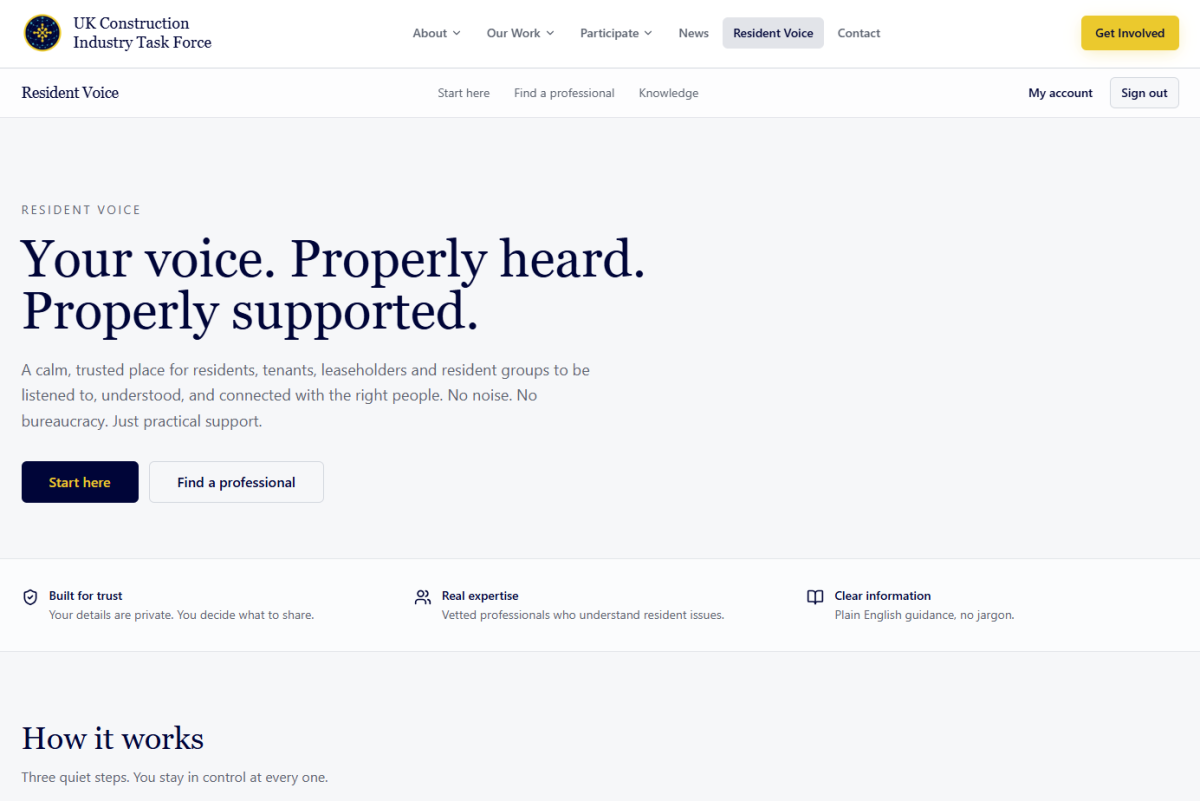
The Resident.
Not the abstract “end user” considered in design risk assessments. Not the theoretical occupant referenced in guidance. But the real, lived experience of people in their homes. |